|
A Brand
Called Manchester United Football |
Statistics taken from an article by Thomas Heath in The
Washington Post
 ndia's
National Football League has a Mumbai-based team with a pretentious name
like Mahindra United (changed from Mahindra and Mahindra), no doubt an
imitation of the world-famous Manchester United football team. More than
just a superficial name change, what does it take to build a sports
franchise like Manchester United (Man U). ndia's
National Football League has a Mumbai-based team with a pretentious name
like Mahindra United (changed from Mahindra and Mahindra), no doubt an
imitation of the world-famous Manchester United football team. More than
just a superficial name change, what does it take to build a sports
franchise like Manchester United (Man U).
- Consistent Winning Record - Man U have won 14 English Premier
League championships (one of the toughest leagues in the world), 10
Football Association Cups (a single-elimination tournament) and 2
European Champions Cups (the sport’s most prestigious club
competition). In 1999 United completed a historic treble of the
Premier League title, the FA Cup and the European Champions Cup, a
feat which
has never been done before.
- Global Fan Base - Manchester United has 53 million fans
worldwide, however only 20% of them are from Great Britain. The vast
legion of Man U fans are foreigners, who have no connection with the
city or the country. For example, Asia has around 16.6 million United
fans, compared to 11.1 in Britain and Ireland.
- Big-Name Superstars - David Beckham heads Manchester United's
star appeal. To add to the glamour, he is married to pop singer Posh
Spice (Victoria Adams) and has a hit movie with his name (Bend it like
Beckham). It also helps that Man U has big-name fans like film star
Roger Moore, singer Rod Stewart and basketballer Hakeem Olajuwon.
- Pervasive Media Coverage - Manchester United games are
broadcast in United Kingdom, Asia and Australia. A third of Man U's
revenues (nearly $80 million) come from the television rights from
British Sky Broadcasting (BSkyB).
- Wealthy Team - Manchester United has an annual revenue close
to $250 million, and its franchise value is $1 billion. In 2002,
Manchester United, a publicly traded company, earned an after-tax
profit of $37.5 million, and paid out $12 million in dividends. United
sells out every home game in Old Trafford, Manchester, which provides
another steady stream of revenue (average ticket price is $36). Tours
abroad add to its coffers - Man U is charging $3 million as appearance
money, plus expenses, for its forthcoming July/August 2003 4-city US
tour.
- Global Sponsors - Manchester United signed a 13-year, $450
million deal with Nike in 2002. Man U also has sponsorship deals with
British telecommunications firm Vodaphone, film company Fuji, Internet
firm Lycos, beer giant Anheuser Busch and soda company Pepsi.
Mahindra United can never aspire to have the superstar stature of Manchester
United based on pure talent alone. Out of 203 countries in the world that play football, India is ranked No. 122.
India ranks as low as No. 21 in football in Asia.
However we do have a home-grown franchise, the Indian Airlines hockey
team, that can emulate and learn how to market itself in the global sports
marketplace in the mould of Manchester United.
First off, Indian Airlines has some of the best hockey players in the
world, headed by Olympians Dhanraj Pillai, Ashish Ballal, Mukesh Kumar,
Dileep Tirkey and others. They are the current national champions, having
won the title in December 2000 in Jammu. They were finalists in the Bombay
Gold Cup (2001, 2002), won the Bombay Gold Cup in 2003, were finalists in
the Jawaharlal Nehru hockey tournament in Delhi (2002) and won the Murugappa Gold Cup in Chennai (2002).
While Indian Airlines keeps winning in different tournaments across the
country, they have to plan a schedule that will see Indian Airlines play
in at least one premier club tournament in Europe, Australia, Asia and the
Americas over the course of an year. That will ensure name recognition of
the Indian Airlines brand in sporting arenas across the world, and the
building of a fan base beyond the borders of the country, with the primary
target group being expatriate Indians.
While all Grade I hockey tournaments in India are telecast on
Doordarshan Sports, Indian Airlines should independently negotiate with a
24 hour satellite sports channel (TEN Sports?) a deal to telecast any
tournament final abroad featuring Indian Airlines. Indian Airlines should
also have deals with shoe companies, equipment manufacturers, and for name
branding on their jerseys.
For its long term growth, Indian Airlines should plan on owning its own
astro-turf field. There used to be talk of have one such field in its Kalina
campus in Mumbai, though nothing came of it eventually. Also essential
would be an Indian Airlines Hockey Academy (similar to the Air India
Hockey Academy in the capital) for generating the next generation of
hockey players for Indian Airlines and for the nation.
Interestingly, David Beckham is a product of Manchester United's
in-house player farm, being first spotted by Man U scouts when he was 14
years, and then groomed within the Manchester United system from a
talented teenager to a national player to an international superstar.
To sum up, Indian Airlines has the talent, star power and a consistent
winning record to think beyond India and be a player in the global sports marketplace. How it achieves
that would be through a fusion of media strategy, global scheduling of
tours, sponsorship deals, and name brand marketing. Are there any takers
in the Indian Airlines Sports Control Board for transforming the Indian
Airlines hockey team from a national powerhouse to an international sports brand?
|
|
Six Pakistanis
Get Lucrative Club Contracts to Play Hockey Abroad |
 ix
enterprising Pakistani national team players have chucked aside the
shackles imposed by their hockey bureaucracy and signed up for
playing club hockey abroad. The list of players, which includes the
present Pakistan captain, vice-captain and a former captain, is as
follows: ix
enterprising Pakistani national team players have chucked aside the
shackles imposed by their hockey bureaucracy and signed up for
playing club hockey abroad. The list of players, which includes the
present Pakistan captain, vice-captain and a former captain, is as
follows:
| Country |
Player |
Position |
| Germany |
Mohammad Nadeem |
Forward (captain) |
| |
Mohammad Waseem |
Half-Back (vice-captain) |
| |
Sohail Abbas |
Full-Back |
| England |
Aamir Saleem |
? |
| Malaysia |
Ahmed Alam |
Goalkeeper (ex-captain) |
| |
Syed Imran Ali Warsi |
Full-Back/Half-Back |
Like their Indian counterparts, the PHF officials made entirely
predictable noises about the players not taking permission from the
federation before playing abroad. They fail to realise that the federation does not have any contracts with its players and can only
request the players' respective employers for their services in international events.
What the players had to do, and which they did, was to obtain No Objection
Certificates from their respective employers before playing club hockey
abroad.
The PHF launched an 'investigation' into the absence of the
players to take action against the players. Of the missing
players, captain Nadeem returned from Germany in time for the 2-day
selection trials, but was not allowed to participate.
Nadeem met with PHF secretary Brigadier Musarratullah Khan, and his
employer - National Bank of Pakistan - also backed its player and followed
up his case with the PHF. However, the outcome of these meetings was
negative for Nadeem.
"After hearing Nadeem's explanation and his department's version, we have decided to penalise
Nadeem by dropping him for the tour of Australia, but he can be considered for
national team selection after the tour of Australia," said the PHF
secretary.
Nadeem was not among the guests at a reception given by Pakistan
President General Pervez Musharraf in Islamabad on May 22 to honour the Azlan Shah
Cup winning Pakistan hockey team. Mohammad Nadeem had captained Pakistan to the Azlan Shah crown,
but was left out by the hockey federation as a punishment for playing in Germany without seeking prior permission.
Along with Nadeem, Sohail Abbas and Mohammad Waseem were also dropped
for the Australian tour. Largely due to the axing of three key players,
Pakistan proceeded to lose all four matches in the Perth Hockey Challenge.
With a bureaucracy like this, who needs enemies?
Indian hockey players, both men and women, should take a leaf from
their Pakistani players and actively market their talents in the
foreign hockey leagues. No Indian has ever played in the highly
competitive Dutch and Australian hockey leagues. Dhanraj's game as well as
fitness went up a notch after his stint in the German hockey league.
It is interesting that in cricket, there has been an Indian presence in
English county cricket in every decade since the early part of the past
century, as the following table shows:
| Decade |
Player |
Team |
| 1920s |
S. Nazir Ali |
Sussex |
| 1930s |
Iftikar Ali Khan Pataudi |
Worcestershire |
| 1940s |
Ramesh Divecha |
Northamptonshire |
| 1950s |
Mansur Ali Khan Pataudi |
Sussex (1957-70) |
| 1960s |
Abbas Ali Baig
Farokh Engineer
Eknath Solkar |
Somerset
Lancashire
Sussex |
| 1970s |
Bishen Singh Bedi
Venkataraghavan
Dileep Doshi |
Northamptonshire
Derbyshire
Nottinghamshire |
| 1980s |
Sunil Gavaskar
Dileep Doshi
Kapil Dev
Ravi Shastri |
Somerset
Warwickshire
Northampton/Worcester
Glamorgan |
| 1990s |
Mohammad Azharuddin
Ravi Shastri
Sachin Tendulkar
Manoj Prabhakar
Anil Kumble
Javagal Srinath |
Derbyshire
Glamorgan
Yorkshire
Durham
Northamptonshire
Gloucestershire |
| 2000s |
Anil Kumble
Rahul Dravid
Saurav Ganguly
Virendra Sehwag
Javagal Srinath
Mohammad Kaif |
Leicestershire
Kent, Scotland
Lancashire
Leicestershire
Durham
Derbyshire |
The message to Indian hockey players is simple - if you are talented,
ambitious, competitive and have marketable skills, play and earn money
abroad. You will be a better player for that experience.
|
|
Pakistan
Hockey Rolling in Sponsorship and Grant Money |
 he same month
that saw Castrol withdraw from sponsorship of the Indian hockey team also
saw National Bank of Pakistan
(NBP) sign a 1-year Rs. 1
crore deal for sponsoring the Pakistan hockey team. The sponsorship package, under which the NBP logo will be put on national
team's shirts, was formally announced by NBP president Ali Raza.
This has come as a major relief to the PHF which was without a major sponsor
for around a year following the decision of the previous sponsor Habib Bank
not to renew their 3-year deal with the PHF. he same month
that saw Castrol withdraw from sponsorship of the Indian hockey team also
saw National Bank of Pakistan
(NBP) sign a 1-year Rs. 1
crore deal for sponsoring the Pakistan hockey team. The sponsorship package, under which the NBP logo will be put on national
team's shirts, was formally announced by NBP president Ali Raza.
This has come as a major relief to the PHF which was without a major sponsor
for around a year following the decision of the previous sponsor Habib Bank
not to renew their 3-year deal with the PHF.
Prior to this deal with NBP, another bank, Al-Falah, had sponsored the
tour of Malaysia and Egypt for Pakistan's senior and junior teams
respectively. Al-Falah gave a cheque of Rs. 2.2 lakhs to the senior team for winning the
Sultan Azlan Shah Cup, and a similar amount to the junior team for finishing second in
the Akbar-el-Yom 7-nation tournament in Cairo, Egypt.
The bank also gave special prizes for outstanding individual performances,
with the senior team's penalty corner shooter Sohail Abbas and the junior
team goalkeeper Salman Akbar being awarded Rs. 20,000 each. Sohail Abbas was
declared the man of the tournament in the Sultan Azlan Shah Cup, while
Salman Akbar was selected as the best goalkeeper of the Akbar El-Yom
tournament.
Apart from the above sponsorship deals, Pakistan hockey is also
benefiting from being a favoured sport of the ruling establishment.
Pakistan
president General Pervez Musharraf invited the Azlan Shah Cup winning
hockey team to President House in Islamabad for a reception where he awarded a cash
prize of Rs. 2 lakhs to each member of the team. Musharraf said that he
had watched a little bit of Pakistan's matches in the tournament and was impressed by the players' performance in the five-nation event.
At the reception held on May 22, General Musharraf promised Rs. 2
crores to be given to the team for winning any major event like the
Olympics, World Cup or Champions Trophy, and Rs. 1 crore for winning
the Asian Games hockey title. Pakistan team manager Shahnaz Shaikh praised the gesture of
General Musharraf and hoped it would prove a tonic for the players to work hard and win medals for Pakistan.
Due to a major grant by General Musharraf to upgrade the hockey
infrastructure in Pakistan, 8 to 10 artificial turf pitches would be in place
in 2003, while another 6 to 8 pitches would be laid in the year 2004.
Two new astro-turf hockey grounds would be put in place at Abbottabad and
Sialkot, while poligras artificial turfs would be replaced in Quetta,
Peshawar, Karachi, Islamabad and Hyderabad.
The South Asian Federation Games Secretariat has given a special grant of
Rs. 50 lakhs to the PHF. Pakistan Punjab (West Punjab) chief minister Chowdhary Parvez Elahi has
allocated Rs. 3.5 crores for the upgradation and renovation of the National Hockey Stadium
in Lahore. This follows meetings between the Punjab chief minister and PHF
president General Mohammad Aziz Khan and PHF secretary Brig. Musarratullah Khan.
Of the allotted amount, Rs. 2.5 crores will be used to renovate media and
spectators' enclosures, players changing rooms, VIP lounge, beautification of the main building and repair of allied areas.
The amount will be given to Punjab Sports Board who will carry out this renovation and upgradation work
based on PHF's proposal.
Rs. 1 crore would be used to construct a two-story residential hostel
which can accommodate about 80 people. This will reduce PHF's financial burden and expenditure it has to incur on boarding and lodging of the
teams playing at the National Stadium.
The Punjab chief minister is also considering allotting a special grant of
Rs. 1 crore to the PHF for laying synthetic turfs in Gujranwala and Gujrat
in the Punjab province. Finally, the chief minister agreed to provide a
commercial plot to the PHF in Lahore to construct a petrol pump, the money from
which would sustain PHF office expenditure.
|
|
Small Solace for Olympic Gold Medallist Dung Dung |
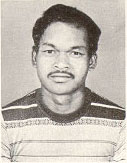
Sylvanus Dung Dung
ylvanus Dung Dung finally has something to feel good about, after
getting small financial help from unexpected quarters.
In the early part of the year, there were media reports that the Moscow Olympics hockey gold medallist
was planning to sell the medals he earned from the game in order to make ends meet.
"I just get Rs. 2,500 as pension and have 5 dependents to feed (3 sons,
1 daughter, 1 niece). Life is becoming unbearable with each sunrise. Occasional bouts of depression due to poverty may one day force me to auction my heart and soul
(the Olympic hockey gold and other medals)," Dung Dung, one of the architects of India's 4-3 victory over Spain in
the 1980 Olympic final, told PTI in
Ranchi.
Stung to action on reading this media report,
Professor Ishwar Murthy from
Hong Kong initiated an online appeal on BharatiyaHockey.org to first
locate and then help Dung Dung. Seeing the appeal, Vikas Choudhary from
USA contacted his brother in Ranchi who then went to a residential SAI
sports school in Bariyatu and obtained Dung Dung's contact details.
Arumugam of
Stick2Hockey.com fame from Delhi then talked to Dung Dung on the phone
and obtained his bank account details.
Dung Dung can be contacted as follows:
Sylvanus Dung Dung
B-64, Harmu Housing Colony
Ranchi 834012
Jharkhand, India
Residence Telephone: (0651) 2245765
Account No. 3274, Bank of India, Dronda Branch,
Ranchi
Those of you who wish to help him may do so by getting in touch with
him directly. The following amounts
have been received by Dung Dung so far:
| Who |
Amount |
Amount (Rs.) |
| Prof. Ishwar Murthy |
HK$ 1000 |
Rs. 6000 |
| BharatiyaHockey.org |
US$ 125 |
Rs. 6000 |
Dung Dung is willing to coach too, despite the lack of a formal
coaching certification. The former master craftsman pleads: "For the time being, I shall be happy to coach even a school team as it will supplement my meagre
income. However, my applications for coaching are being turned down as I
am not a product of the National Institute of Sports, Patiala. My only request to the Jharkhand government and the Indian Hockey Federation is to utilise my experience
in any coaching job. This would benefit the youngsters and give me a new lease of life as
well."
The veteran right-back played all the three majors - the Olympics
(1980), World Cup (1978) and the Asian Games (1978) - and successfully coached the Central Command
team from Lucknow to four consecutive victories in the Army hockey championship. Dung Dung, who joined the army on January 27, 1965, represented Bihar and Services in the Rangaswami Cup, the
national hockey championship, between 1977 and 1981, before retiring in 1988.
The 56-year-old Adivasi sportsman hails from Simdega district in Jharkhand, which has produced a large number of national and international
players. Former internationals Michael Kindo, Justine Kerketta, Noel Topno and James Kerketa are Dung Dung's contemporaries, while Bimal Lakra is a member of the present India
team that is touring Australia.
Three women players - Sumarai Tete, Kanti Baa and Masira Surin - who were part of the Commonwealth Games gold
medal winning hockey team - belong to the same district.
The IHF has yet to show any sort of interest in helping Dung Dung,
making a mockery of the fact that they are the apex body for the sport and
its players in the country. But at the individual level, let's all pitch
in and help Sylvanus Dung Dung. That's
the least one can do for a player who won the Olympic gold medal for
India.
|
| Hockey Is A Passion
in Kodagu |
 odagu,
the smallest district in Karnataka is known as the Scotland of India.
Kodagu is also the hockey hotbed of Karnataka, having produced such
illustrious players as B. P. Govinda, M. P. Ganesh, B. K. Subramani, A. B.
Subbaiah, K. K. Poonacha, C. S. Poonacha, Jagadish Ponnappa, Len Ayyappa,
and Amar Ayyamma. odagu,
the smallest district in Karnataka is known as the Scotland of India.
Kodagu is also the hockey hotbed of Karnataka, having produced such
illustrious players as B. P. Govinda, M. P. Ganesh, B. K. Subramani, A. B.
Subbaiah, K. K. Poonacha, C. S. Poonacha, Jagadish Ponnappa, Len Ayyappa,
and Amar Ayyamma.
The Kodava Hockey Festival, involving only Kodava families, is listed
in the Limca Book of World Records
as the largest family sports tournament in the world. Every year, the tournament takes on a different name and is held in a
different town, based on the family that is organizing it. The tournaments
are held under the aegis of the Kodava Hockey Academy.
This family tournament dates back to 1997 when Pandanda Kuttappa and
his brother thought of having a common platform where all the Kodavas
could come together and play the game they love most. The tournament has
grown rapidly in size from its early beginnings, as seen from the table
below:
| Year |
Organizing Family |
Nos.
of Teams |
| 1997 |
Pandanda |
68 |
| 1998 |
Kodira |
120 |
| 1999 |
Ballachanda |
135 |
| 2000 |
Cheppudira |
170 |
| 2001 |
Nellamakkada |
226 |
| 2002 |
Chekkera |
?? |
| 2003 |
Kalianda |
281 |
Each team is made up of members of only one, blood-related family.
Women can also participate; they have the choice of representing either
their paternal side or maternal side. Uncles, cousins, brothers and nephews who otherwise barely see each
other are now part of a team effort. Many of them work in cities like
Bangalore, Chennai or Delhi; they time their annual vacation to coincide
with the tourney which is the talking point for months together. The
tournament has brought together fractured families, and helped bury ancient
animosities. That was true till the 2003 edition, where as many as 281 teams
competed in the Kalianda Gold Cup held in Madikeri, which was won by the Nellamakkada family team.
However, the lowlight of the tournament was a fracas between a player from the Kullettira family and an umpire. The crowd entered the ground during the altercation and roughed up
the player who hit the umpire.
The Tournament Director suspended the 3-time champion Kulletira family
from the tournament, and there is talk of the Kulletira family
resorting to legal action against the tournament organisers. International umpires, players, coaches and others involved at high levels of
hockey administration were present when the unruly incident occurred.
|
| Punjab National Bank
Sets Up Hockey Academy in Delhi |
 unjab
National Bank (PNB) and the Sports Authority of India (SAI) entered into an agreement to establish
the PNB Hockey Academy at the Major Dhyan Chand stadium in Delhi. unjab
National Bank (PNB) and the Sports Authority of India (SAI) entered into an agreement to establish
the PNB Hockey Academy at the Major Dhyan Chand stadium in Delhi.
Under the agreement, SAI will provide its sports facilities, including synthetic turf, scientific support and coaches,
while PNB will bear all the expenses of running the academy, providing for the players' boarding and lodging, equipment and competition exposure.
It will be a residential academy and the trainees will be paid a fair
amount as stipend. PNB will also arrange education for the trainees in good public
schools.
Padma Shri and 1975 World Cup-winning captain Ajitpal Singh will supervise the functioning of the academy.
The SAI-PNB initiative is the second of its kind, the first being the SAI-Air India Academy, which is also located at the Dhyan Chand stadium.
The PNB Academy is geared more towards the juniors, typically those in the
8-10 standards.
At an earlier press conference announcing this venture, the bank's chairman and managing director S. S. Kohli said that the academy was conceptualised by former India hockey greats
like Ajitpal Singh and Harbinder Singh. According to Kohli, senior officials of the
bank will oversee the functioning of the academy, with an executive
director heading the management team.
|
|
India Lose To Australia
By Last Minute Goal in Hockey Challenge |

Jugraj Singh gets past Paul Gaudoin - Photo
courtesy Jon Buckle of Getty Images
he first leg
of a 2-leg 3-nation 4-team hockey tournament was held in Perth from May 28
to June 1. India, Pakistan, Australia and Australia 'A' were the
participating teams. The Indian team had at least six players in their
mid-30s, including captain Dhanraj Pillai, Mukesh Kumar and Baljeet
Dhillon.
| Date |
Result |
Goal Scorers - India |
| May 28 |
India 2 - Australia 'A' 0 |
Dileep Tirkey, PC (25 m)
Gagan Ajeet Singh (60 m) |
| May 29 |
Australia 2 - India 0 |
|
| May 31 |
India 2 - Pakistan 0 |
Baljeet Singh Dhillon, PS (26 m)
Prabhjyot Singh (55 m) |
| June 1 |
Australia 2 - India 1 |
Dhanraj Pillai, PC (49 m) |
Pakistan came to the tournament after dropping three key players for
disciplinary reasons -
skipper Mohammed Nadeem, penalty-corner expert Sohail Abbas and left-half
Mohammed Waseem. The trio were axed after they took part in the German
Hockey League (Bundesliga) without seeking permission from the Pakistan Hockey
Federation. Dropping Sohail Abbas was a fatal blow, since he was
Pakistan's highest scorer for the last three years.
Without these three key players, Pakistan came last in the tournament, losing
all four of their matches, including a loss to the Australia 'A'
development team. Just six weeks earlier, the full-strength Pakistan team
which included the three dropped players had won the Azlan Shah tournament
in Malaysia beating world champions Germany in the final.
At the end of the tournament, India holds a 4-1 advantage in the last 5
matches played against Pakistan. However, against Australia, India has
only a 1-6 record in the last 7 matches played against Australia.
The Indian team was as follows:
Goalkeepers: Devesh Chauhan, Kamaldeep Singh
Full-Backs: Dileep Tirkey, Kanwalpreet Singh, Jugraj Singh
Half-Backs: Ignace Tirkey, Bimal Lakra, Vikram Pillai, Viren
Rasquinha, Prabodh Tirkey, Baljit Singh Saini, Sandeep Michael
Forwards: Dhanraj Pillai, Baljeet Singh Dhillon, Gagan Ajeet
Singh, Prabhjyot Singh, Tejbeer Singh, Tushar Khandekar
Officials: Chief Coach - Rajinder Singh, Assistant Coach - Baldev
Singh, Penalty Corner Coach - Harendra Singh
|
|
Orissa
Win 34th Junior National Women's Hockey Championship |
Based on Match Reports by Micky Aigner of The Indian Express - Pune
he
34th Junior National Women's Hockey Championship was held in Pune from May
6 - 11. The matches were played at two venues - Ammunition Factory, Khadki, ground
and Khadki Cantonment Board ground.
Midway through the tournament, Himachal Pradesh lodged an official
protest on the age validity of four Jharkhand
girls - Asunta Lakra, Guddi Kumari, Amruta Minz and Sushma Minz. Hosts Women's Hockey Association of Maharashtra
(WHAM), in accordance with the protest rules, had to go through the process of referring
the girls to medical experts for age verification. If proved overage, Jharkhand
would be scratched from the tournament.
After a night of trepidation, Jharkhand, coached by L. K. Minz, breathed easy. The Indian Women's Hockey Federatoin (IWHF)
dismissed Himachal's claims by officially informing hosts WHAM that Jharkhand's records were in order. IWHF thus gave
the Jharkhand players eligibility status for the tournament, and the four players did not have to go through medical tests to
ascertain their ages.
Orissa and Jharkhand reached the final with the following match
results:
| Date |
Orissa |
Jharkhand |
| May 5 |
|
beat Gujarat 13-0 |
| May 6 |
beat Madhya Pradesh 6-0 |
beat Himachal Pradesh 10-0 |
| May 8 |
beat Uttaranchal 2-0 |
beat Delhi 6-0 |
| May 10 (semis) |
beat Uttar Pradesh 3-2 |
beat Haryana 4-1 |
In the final played on May 11, Orissa huffed and
puffed before subduing an off-colour Jharkhand 4-3 in the
tie-breaker, after both teams shared a goal each in full time and extra-time. A
huge turnout at the Ammunition Factory, Khadki, ground bore witness to a match
that went down to the wire, which eventually saw a vastly improved Orissa, coached by Amulya Nandu Bihari,
pick up their fourth junior title.
Orissa was the first to score when Basanti Lakra slammed home
Anjana Barla's setup off their fourth penalty-corner in the 53rd minute. Shaken
by the goal, Jharkhand went all out and their equaliser came off a
penalty-corner ten minutes later. The goal was a brilliant high flick executed
by Amrita Minz with excellent presence of mind after Sushma Kiran's effort was
blocked.
In the tie-breaker goalkeeper Pushpanjali proved the heroine for Orissa,
blocking out the strokes of Asunta Lakra, Guddi Kumari and Dulali Minz, after
Seting Soy and captain Sushila Lakra found the goal with their strokes. Orissa, on the
other hand, after choking with their second and fourth strokes, taken by Ranjita
Barla and Rinna Kispotta, netted through Anjana Barla, Sumitra Tirkey and Poonam
Tirkey.
Orissa, who went into the final as ‘underdogs’, thus maintained their
clean slate against Jharkhand in the four times they played so far. This is also
the fourth national title for Orissa, who had won earlier
in Mumbai (1999), Chennai (2000) and Jalandhar (2001).
In an earlier match, defending champion Haryana beat Uttar Pradesh 1-0 through a goal by Kanupriya in the 49th minute to finish third.
The following were the awards given: Best Defender: Manjiri (Uttar
Pradesh); Best Forward: Poonam Singh (Uttar Pradesh); Highest Scorer: Guddi Kumari and
Amrita Minz (Jharkhand); Player of
the Tournment: Asunta Lakra (Jharkhand).
|
| Photograph
of the Month |

The 1975 World Cup Final in Kuala Lumpur
he Photograph of
the Month for June features Shivaji Pawar in action in the 1975 World Cup
final between India and Pakistan. India went on to win this hockey classic
2-1. Shivaji Pawar was the centre-forward of the victorious team. He
scored a goal against Germany (India won that match 3-1), and also scored a
goal against Malaysia in the semi-final, which India won 3-2.
The 1975 World Cup was unique in many aspects. It was the first hockey
World Cup to be held on Asian soil. 3 of the 4
semi-finalists were Asian, both the finalists were Asian. In no other
World Cup has this feat been repeated. This was the only World Cup final
between India and Pakistan in any sport. India scored two goals against Pakistan for the first
time. This was the first World Cup final to be telecast by Doordarshan.
In
India, in every government office, in each restaurant, in every cinema hall, in every
other meeting place, the Indo-Pak final became a talking point. For people travelling by air that day,
some Indian
Airlines pilots announced over the public address systems of the
aircraft that India had equalised, and later that India had won.
There is also the
story of film star Manoj Kumar, who due to his fear of air travel, was travelling by
train. When the train entered a wayside station, he pleaded with the guard to
delay the train for 5 minutes so that they all could learn of India's fate in the
World Cup. After India won, the train started on its journey again.
India's
victory in the World Cup was celebrated with great joy and parades of the team in
different parts of the country. Hockey in India got a whole generation of young fans by
that one world title.
|
| Money Matters |
outh Africa’s biggest supermarket chain, SPAR, has announced a sponsorship
deal of
Rand 5.2 million that will cover the women's national
hockey team, the women's inter-provincial tournament and the u-21
President's Cup inter-provincial tournament.
SPAR Marketing Director Roelf Venter said that women's sports provides an exciting platform on which to market
the SPAR stores and build its brand. "Women’s hockey has considerable popular support, it is efficiently managed and it has massive potential to grow in the
future. Women's hockey is rated as the number one sport in
South Africa in terms of growth, and the sport has the added advantage of
having a sound development programme in South Africa."
"In addition," said Venter, "the majority of our customers are women, and we believe we have a duty to support them."
SPAR has supported South African women's hockey since the Olympic qualifier in Cape Town in 1995.
In Australia, Kookaburra Sport has signed a 4-year deal to be the exclusive supplier of
off-field apparel for the national women’s team. Kookaburra Sport is
already the official supplier of hockey balls and bags to Hockey
Australia.
|
| Media Matters |
he
popular Hindi magazine National Sports Times celebrated its 9th
anniversary recently at TT Nagar stadium in Bhopal. The function was
presided over by Union Sports Minister Vikram Verma.
On this occasion many sports personalities including Olympian and
ex-hockey captain Zafar Iqbal, Bhopal's first Arjuna Puraskar winner
Jalaluddin, hockey superstar Dhanraj Pillai, television and radio
commentator Sushil Doshi, vice-president of the Madhya Pradesh women's
hockey association, Anil Verma, and others were invited and honoured by the
minister.
Renowned hockey critic, sports writer and author of many sports books,
Shri Arun Arnaw was honoured for his outstanding work in the field of
sports journalism by the minister.
Indrajit Mourya is the editor of the Bhopal-based magazine National
Sports Times.
|
| Visitor of
the Month |
Surjit Singh Brar,
senior team manager of the Toronto Lions Field Hockey Club, is this edition's Visitor of the
Month. Surjit had the following to say to BharatiyaHockey.org:
I played hockey for 30 years in India, playing with stalwarts like Ajit Singh, Varinder Singh and others. 1n
1970, Rajinder Singh (New Delhi) and I played in the same team for two years. I
will be visiting India in June 2003 and hope to meet Rajinder Singh.
It is nice to see that someone is keeping the whole world up
to date on Indian field hockey. Keep up good work.
If any player is coming to Toronto, Canada, and wants to play hockey, please
contact me. Thanks.
|
| Fun With Numbers |
he
2003 Champions Trophy to be held in Amstelveen from August 16 to 24 is the
silver jubilee edition of this prestigious annual event. India has qualified
for this premier event only 9 times, has never won the title, and has
finished last twice. India's Champions Trophy results are listed below:
| Nos. |
Year |
Venue |
India |
Gold |
| 2nd |
1980 |
Karachi |
5th |
Pakistan |
| 4th |
1982 |
Amstelveen |
3rd |
Netherlands |
| 5th |
1983 |
Karachi |
4th |
Australia |
| 7th |
1985 |
Perth |
6th (last) |
Australia |
| 8th |
1986 |
Karachi |
5th |
Germany |
| 11th |
1989 |
Berlin |
6th (last) |
Australia |
| 17th |
1995 |
Berlin |
5th |
Germany |
| 18th |
1996 |
Chennai |
4th |
Netherlands |
| 24th |
2002 |
Cologne |
4th |
Netherlands |
India has lost more than 50% of its matches played in the Champions
Trophy. In its 9 appearances, India has the following match record:
| Played |
Won |
Drawn |
Lost |
Goals For |
Goals Against |
| 49 |
15 |
8 |
26 |
102 |
139 |
|