| Viren Rasquinha Appointed COO Of Olympic Gold Quest |
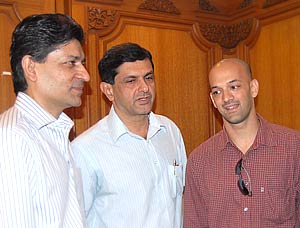
Geet Sethi, Prakash Padukone and Viren Rasquinha
Photograph Courtesy Times of India
 quipped with management skills after a stint at the Indian School of Business, Hyderabad, former hockey ace Viren Rasquinha is back to contribute to Indian sport by joining Olympic Gold Quest (OGQ) as its Chief Operations Officer (COO). quipped with management skills after a stint at the Indian School of Business, Hyderabad, former hockey ace Viren Rasquinha is back to contribute to Indian sport by joining Olympic Gold Quest (OGQ) as its Chief Operations Officer (COO).
OGQ is a foundation launched by cuesport legend Geet Sethi, badminton icon Prakash Padukone and table tennis stalwart Niraj Bajaj, to support Indian sportspersons in different disciplines with Olympic gold potential.
"The one-year stint at ISB has taught me a lot in what it takes to be a good manager and leader, and I am really looking forward to working closely with legends like Geet and Prakash. Sport is something that has given me so much in life, and I truly believe that I can make a difference to sport in India with my experiences as a player and with my management background," said an excited Rasquinha.
Asked what would be his thrust area, the 2005 Arjuna Awardee, with 180 international hockey caps under his belt, said he would identify talent and help it reach the top.
"The challenges are enormous but it is very exciting for me to work with a fantastic team at OGQ. My thrust areas would be identifying the most talented athletes in the country in individual Olympic sports and those with potential to win an Olympic medal, and do everything possible to take them to the highest level of performance," he said.
Rasquinha's role with the OGQ will be two-fold. He will be responsible for bringing in financial support for the athletes supported by the OGQ through tie-ups with corporates and branding. He will also be working to identify and groom more talented athletes.
The organisation currently has five athletes on its roll: discuss thrower Vikas Gowda, 800 m runner Tintu Luka, shooter Gagan Narang, boxer Sanjay Kolte and shuttler Guru Sai Dutt.
"Right now, we are concentrating on six sports - shooting, archery, boxing, wrestling, athletics and badminton. We are also supporting the Usha School of Athletics. But that does not mean that a talented athlete from any other discipline will not be considered. One thing is clear though; we will be working along with the sporting federations, not against them," Rasquinha said.
Rasquinha, an immensely gifted midfielder known for his fearless tackling skills, tireless running and calm temperament, also played for Stuttgart Kickers in the German Bundesliga in the 2007-08 season.
After quitting the game in 2008, Rasquinha did his MBA at the Indian School of Business, Hyderabad, which is ranked 15th in the world in the Financial Times (FT) world rankings for MBA schools. He has a dual major in Marketing and Strategy.
|
| Hockey Fans Worldwide 'Sticking For' Indian Hockey |

Article by A. Joseph Antony, courtesy The Hindu
 he flight from Amsterdam took 12 hours, and the drive from Bangalore to Anantapur four more. Fatigue and jetlag notwithstanding, Spanish hockey wizard Santi Freixa was as fired up to train poor children, as when turning out for his country. he flight from Amsterdam took 12 hours, and the drive from Bangalore to Anantapur four more. Fatigue and jetlag notwithstanding, Spanish hockey wizard Santi Freixa was as fired up to train poor children, as when turning out for his country.
What is it that drew FIH World Junior Player of the Year, two-time European Player of the Year and two-time Olympian Freixia to Anantapur, a drought-driven dust-bowl in Rayalaseema (Andhra Pradesh), busy as he was playing for Amsterdam in the Dutch league and studying for his MBA? It was to live a dream he shared with teammate Andreu Enrich of using sports as a means for social development.
After the December 2005 Champions Trophy in Chennai, Enrich visited the Rural Development Trust (RDT), an Anantapur-based NGO founded by Spanish Jesuit Vicente Ferrer. Soon Freixa and Enrich set up 'Stick amb India', a registered society in their native town of Terrassa, to fund an academy in Anantapur.
In 2006, Enrich, a business management graduate, along with Spanish woman international Clara Vancells and clubmate Anna Serra, got the scheme going. Monthly micro donations came mostly from members of their club, Atletic Terrassa. Enrich has made eight visits thus far to Anantapur, overseeing a full-fledged residential scheme for children aged between 12 and 16 years.
Freixa, meanwhile, enrolled an international support cast of Dutch drag-flicking destroyer Taeke Takaema, Australian Jamie Dwyer, German Timo Wess and compatriot Pol Amat of Spain. The project also enjoys the blessings of FIH President Leanardo Negre and current Indian coach Jose Brasa, also a Spaniard.
Backing on home turf has come from Indian custodian Adrian D'Souza, V. S. Vinaya, Vikram Kanth and Hari Prasad, as also from past greats Dhanraj Pillay, Mukesh Kumar and Harinder Singh.
For further funding, Freixa and Enrich, the latter an ardent admirer of micro-finance Nobel laureate Muhammad Yunus, have set up http://www.stickforindia.com. A rapidly growing Stick for India Facebook Community will help too, hopes Enrich.
Using the analogy that small steps lead to great ones, and that a wall is built brick by brick, the Stick for India website has 10,000 pixels for sale, each costing €10. About 5 per cent of the pixels have already been picked up.
Some of international hockey's leading lights are pixel patrons, including England’s Simon Mantell, Australians Andrew Smith and Alyson Annan, Germans Matthias Witthaus, Max Weinhold, and Spanish compatriots Alex Fabregas and Sergi Enrique.
A formal launch is planned post the European Nations Cup in Amsterdam in August. Professional film-makers from Spain will visit India in September to make a documentary on the scheme.
Funds raised by Stick for India will be used to enable the laying of an astroturf surface worth Rs. 1.6 crores.
|
| The Unique Family Hockey Festival Of Kodagu (Coorg) |
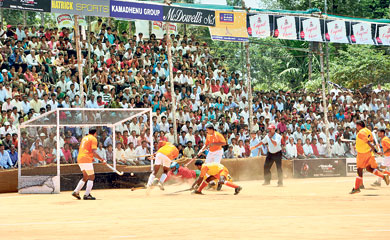
Article from News Reports, Photo courtesy The Times of India
 ockey is dying in most of India. But in hilly Kodagu (Coorg), it’s flourishing not just as a sport, but as a social and cultural bond that finds expression as an annual family hockey festival. Around 60 internationals have represented India in hockey from this region. ockey is dying in most of India. But in hilly Kodagu (Coorg), it’s flourishing not just as a sport, but as a social and cultural bond that finds expression as an annual family hockey festival. Around 60 internationals have represented India in hockey from this region.
In Kodagu, hockey is not just the national sport. The sport is also a symbol of regional tribal identity for the local Kodava community. Everyone here talks of their family's historical connection with hockey with almost mobster-like pride. In most cases, 'The Team' refers to a gaggle of cousins, uncles and aunts.
Previous defeats still rankle and famous victories become part of dining-table folklore. Youngsters who do as they please all year round, turn into obedient children and dutifully show up for the festival. Women have the option of playing for either their maternal team or the family into which they are married into.
In its 13th year now, the Kodava Cup is named each year after the family that organises the festival that year. This year's edition is called the Mandepanda Cup, and is being held in Ammathi village, a blink-and-miss-it outpost in the district. Of the 856 Kodava clans (from a tiny 3-lakh-strong community worldwide), 231 family teams made it to Ammathi for this year's tournament.
"You could say that the Kodavas are the Sardars of the South," says former India goalkeeper A. B. Subbaiah. "Hockey is just one of the similarities. We too are a martial race like the Sikhs. Like them we have at least one member in the army from each family. And yes, we too like to enjoy life." Subbaiah was part of India's gold medal winning hockey team in the 1998 Bangkok Asian Games.
The idea of the family is so great that the likes of Subbaiah, Somayya and M. P. Ganesh become anonymous on arriving here. The names with which they became famous the world over go into the background once the hockey festival kicks off. Now they are Anjaparavanda Boppaiah Subbaiah, Manyepanda Muthana Somayya and Mollera P. Ganesh. Family names first, international recognition comes later.
"It is said that a Kodava is born with a gun in one hand and a hockey stick in another," says Pandanda Kuttani Kuttappa, the brain behind this unique meet that has found its way into record books. Back in 1997, Kuttappa, then a banker, feared for the dwindling impact and identity of his fellow Kodavas. Looking around he found that the army and hockey were the only link that could keep them together.
Kuttappa hit upon the idea organising a hockey meet where only Kodava families could participate. So, in 1997, armed with a budget of Rs. 7 lakhs, Kuttappa's Pandanda family hosted 60 teams for the inaugural meet. 13 years later, this festival has become a much-awaited fixture on the Kodavas' social calendar.
The 2009 Mandepanda Cup was held from 20th April - 15th May, 2009, with the Nellamakkada family defeating the Machamada family 2-1 in the final. The winning team got Rs. 75,000, the runners-up Rs. 50,000 and the two losing semi-finalists (Kaliyanda, Cheppudira) got Rs. 25,000 each.
The winners of the 13 editions of the Kodava Hockey Festival held thus far are given below:
| Year |
Organising Family |
Venue |
Nos. of Teams |
Winner |
| 1997 |
Pandanda Cup |
Karada |
60 |
Kaliyanda |
| 1998 |
Kodira Cup |
Kadanga |
116 |
Kullettira |
| 1999 |
Ballachanda Cup |
Kakotparambu |
140 |
Koothanda & Kullettira |
| 2000 |
Cheppudira Cup |
Ponnampet |
170 |
Koothanda |
| 2001 |
Nellamakkada Cup |
Ammathi |
220 |
Koothanda |
| 2002 |
Chekkera Cup |
Karada Hudikeri |
252 |
Kullettira |
| 2003 |
Kaliyanda Cup |
Napoklu |
280 |
Nellamakkada |
| 2004 |
Maleyanda Cup |
Madapur |
235 |
Koothanda |
| 2005 |
Biddanda Cup |
Madikeri |
222 |
Nellamakkada |
| 2006 |
Kallichanda Cup |
Ponnampet |
217 |
Palanganda |
| 2007 |
Mandettira Cup |
Kakotparambu |
186 |
Mandepanda |
| 2008 |
Alamengada Cup |
Ponnampet |
216 |
Anjaparavanda |
| 2009 |
Mandepanda Cup |
Ammathi |
231 |
Nellamakada |
|
| The Sports Choreographer Behind Chak de! India |
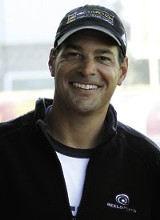
Chak de India Sports Choreographer Rob Miller
Article by Dan McCue in Charleston City Paper
 obert Miller's Reel Sports, which specialises in sports action sequences in Hollywood films, is part of a new wave of Western film companies working in India obert Miller's Reel Sports, which specialises in sports action sequences in Hollywood films, is part of a new wave of Western film companies working in India
Even now, Robert Miller describes the phone call he received from India two years ago with a mixture of surprise and satisfaction.
Indian director Shimit Amin called the Charleston, South Carolina, resident out of the blue to say how impressed he was by Miller's sports choreography in Miracle, the Hollywood ode to the 1980 U.S. men's hockey team.
He then asked Miller if he'd consider working on Chak de! India, a similarly inspirational tale about an Indian women's field hockey team. Though intrigued, Miller was certain the conversation wouldn't come to much.
"I definitely thought we could bring something of value to the project," says Miller, CEO of ReelSports. "But then again, part of me also felt that this was just one of those random inquiries you get in the business."
Just over a year after that initial conversation, Miller found acclaim for his work on Chak de! India, which was hailed for its sports sequences, its positive portrayal of women, and for shattering Bollywood stereotypes of being about nothing more than romantic fantasies with lots of song-and-dance numbers. A massive, unexpected hit, the film won the Asian subcontinent's equivalent of five Oscars and five Golden Globes.
But if Miller's initial half-hour conversation with Amin proved to be a fateful introduction to Bollywood, the largest, most successful, and most well-known of India's nine distinct movie-making hubs, it was also an invitation to join the growing wave of Western filmmakers looking to India.
While in years past the likes of Jean Renoir, David Lean, and Fritz Lang would use the subcontinent as a dazzling backdrop, Miller and others, like Charles Darby of Britain, have embraced the Indian film industry.
What's fueling this fusion of East and West? Partly the desire of Westerners to seize the opportunity to work in an interesting and hospitable environment. Also important, though, has been the desire of Bollywood to impress Western audiences and to make larger forays into savvy and lucrative Western markets.
The Hindi movie industry, centered in Mumbai, is booming. It makes billions of dollars annually from producing more than 1,000 films a year. Even so, it has found little traction in the United States.
Oddly enough, even in a market as mature and diversified as the United States, there's little interest in Indian films, which tend to be formulaic affairs whose fates lie squarely on a small group of actors and directors.
Miller said that while the growing ties between India's film community and Western countries is largely market driven, he also believes it's the result of Indian filmmakers wanting to mature their industry and make more varied, higher quality films that will catch the West's attention.
Miller did the spadework for his current film career through televised sports, and by helping televise the 1996 Summer Olympics and the 2002 Winter Olympic.
A native of North Carolina, Miller was responsible for planning and staging the aquatics, boxing, and cycling competitions for the 1996 Summer Olympics. After the 2002 Winter Games, Miller decided to move back to the Southeast, founded his own movie company, which is run out of his East Bay Street home, and take his television sports experience to the big screen.
Miller's first day on the set of Chak de! India was a crash course in just how different the Indian culture can be. Shortly after his arrival for the first day of work on the film, the young women who comprised the film's field hockey team greeted him with a specially choreographed dance.
"A real, you're-not-in-Kansas-anymore moment," Miller says.
Then there was the arrival on the set of Shah Rukh Khan, one of India's biggest male stars, an event that stirred the kind of commotion one would expect to accompany the arrival of a head of state or Barack Obama.
"It was amazing how nervous everybody became when he arrived," Miller says. "Over there he's like Brad Pitt and Tom Cruise rolled into one."
His task was to ensure that the game, locker room, and practice sequences were as technically correct as possible. The production crew spent four months filming in India before moving to location shooting in South Africa and Australia. For two of those four months of shooting in India, the movie crew was at the mercy of monsoon season, a new dimension to Miller's plunge into the East.
"There is a big difference between being a tourist, and trying to accomplish something on a timetable," Miller said. "Fortunately, the people I met in the Indian film industry were incredibly supportive."
For Miller, the immediate future includes flying to India to begin work on a movie about cricket, a sport he's still largely unfamiliar with. Even so, he's unconcerned, because "everyone I'll be working with grew up with the sport."
|
| India Finish Medal Less In Asia Cup For First Time Ever |
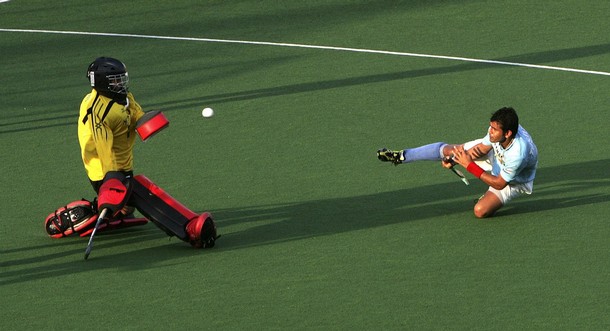
Tushar Khandkar scores past Japan's goalkeeper Katsumi Ichikawa in the Asia Cup (Photo by Reuters)
 n 2006, for the first time ever, an Indian men's hockey team came back medal less from the Asian Games. In 2008, for the first time ever, an Indian men's hockey team failed to qualify for the Olympics. In 2009, for the first time ever, an Indian men's hockey team came back medal less from the Asia Cup. n 2006, for the first time ever, an Indian men's hockey team came back medal less from the Asian Games. In 2008, for the first time ever, an Indian men's hockey team failed to qualify for the Olympics. In 2009, for the first time ever, an Indian men's hockey team came back medal less from the Asia Cup.
With this trifecta of humiliating defeats, India's National Game has officially became India's National Shame. A summary of the 8th Men's Asia Cup tournament is given below.
The 7-nation 8th Men's Asia Cup was held from May 9 - May 16 at the at the Wisma Belia hockey stadium in Kuantan, 250 km northeast of Kuala Lumpur, Malaysia. The other countries in the tournament were host Malaysia, Pakistan, South Korea, China, Japan and Bangladesh. Sri Lanka pulled out at the last minute, because men in Sri Lanka play cricket, to the exclusion of most other sports.
India's match results in the 2009 Asia Cup were as follows:
| Stage |
Date |
Result |
Goal Scorers - India |
| League |
May 10 |
Pakistan 3 - India 2 |
Prabhjyot Singh (13 m), PC rebound
Rajpal Singh (45 m) |
| |
May 12 |
India 2 - China 2 |
Sandeep Singh (31, 34 m) both PCs |
| 5th - 6th |
May 14 |
India 11 - Bangladesh 1 |
Sandeep Singh (10, 13 m) both PCs
Hari Prasad (34 m)
Arjun Halappa (39 m)
V. Raghunath (43 m, PC)
S. V. Sunil (48, 57 m)
Rajpal Singh (65 m)
Sardara Singh (66, 69 m)
Prabhjot Singh (67 m)
|
| |
May 15 |
India 5 - Japan 1 |
Rajpal Singh (2 m)
Sandeep Singh (21 m)
Tushar Khandkar (64, 69 m)
Prabhjyot Singh (66 m)
|
After the lack of telecast of the Sultan Azlan Shah Cup in India, the Asia Cup also was not shown on television (live or even delayed) after the Malaysian Hockey Federation signed a Memorandum of Understanding with Malaysia-based website Hockey-Asia.com. The website had exclusive telecast rights, and streamed the matches for a fee of 1.50 euros (Rs. 100 approximately) per game.
Most of India was watching a domestic club cricket tournament of private teams owned by film stars and business companies of a greatly shortened version of cricket. The fact that the Men's Hockey Asia Cup was not telecast live, where India, and not a private club was participating, did not matter, as most Indian fans are unable to look beyond men's cricket.
The Indian team for the 8th Men's Asia Cup was as follows:
Goalkeepers: Baljeet Singh, Adrian D'Souza
Full-backs: Sandeep Singh (captain), Dileep Tirkey, V. Raghunath
Midfielders: Gurbaj Singh, Sardara Singh, Ajitesh Roy, Vikram Pillai, Prabodh Tirkey, V. S. Vinaya
Forwards: Tushar Khandkar, Rajpal Singh, Prabhjyot Singh, S. V. Sunil, Arjun Halappa, Hari Prasad, Bharat Chikara
Officials: Harendra Singh (Chief Coach), Ramandeep Singh (Assistant Coach), Romeo James (Goalkeepers Coach),
Shrikant Iyengar (Physiotherapist), Pradeep Dutta (Trainer), A. Narendra Kumar (Video Analyst), Dhanraj Pillai (Manager)
|
| Photograph of the Month |
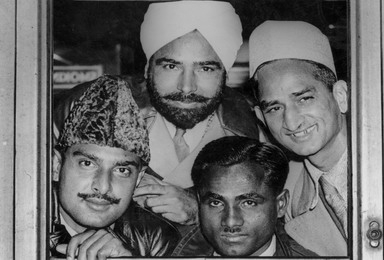
Members of the 1936 Indian Olympic hockey team in a train somewhere in Europe
he Photograph of the Month for June 2009 shows members of the 1936 Indian Olympic hockey team in a train somewhere in Europe. Extreme right is manager Jagannath, while skipper Dhyan Chand is in the bottom of the picture.
In his autobiography 'Goal!', Dhyan Chand describes the train journey from Marseilles to Paris to Berlin thus:
We reached Marseilles on the evening of July 10. Dock workers there were on strike, and the passengers were put to great difficulty in getting their baggage through. We were lodged in an ordinary hotel in Marseilles for the night.
Early next morning we boarded a train for Paris. We travelled third class. There was a restaurant car in the train, but our funds did not permit us to indulge in anything more than a meagre breakfast.
We reached Paris in the evening. A man from Cooks met us at the station and arranged accommodation for us. The next day we visited Eiffel Tower, Notre Dame, Arc de Triomphe, and rounded the day off with a visit to the Follies Bergere which we immensely liked.
We took a night train to Berlin. It was a job even to secure the third class seats provided to us. The night was cold and there was no sleeping accommodation. Cheerfully we forgot all these comforts. We were on a mission for our country.
The journey from Paris to Berlin was instructive. The ceremony of crossing the frontier from France to Germany was brief and painless. The Customs and Police personnel were very courteous and polite. There was only one strict regulation, and that was the ban Germany had placed on importing foreign currency into the country.
At Cologne, an official of the Organising Committee of the Berlin Olympiad joined us and travelled to Berlin, which we reached on the evening of July 13. A large crowd welcomed us at Berlin. The entire Indian community of Berlin was there, some of them carrying the Indian National Congress Tricolour.
|
| Money Matters |
 comparison in the prize money awarded by the Indian Premier League and the Premier Hockey League is given below. comparison in the prize money awarded by the Indian Premier League and the Premier Hockey League is given below.
| Category |
Sub Category |
Indian Premier League |
Premier Hockey League |
| Prize Money |
Winner |
Rs. 4.8 crores |
Rs. 40 lakhs |
| |
Runner Up |
Rs. 2.4 crores |
Rs. 20 lakhs |
| |
Total Prize Money |
Rs. 13 crores |
Rs. 76 lakhs |
| Structure |
Number of Teams |
8 |
7 |
| |
Last Held |
May 2009 |
January 2008 |
| |
Total Matches |
59 |
26 |
| |
Number of Venues |
8 |
1 |
| |
Season Duration |
37 days |
22 days |
| |
Foreign Players |
81 |
21 |
|
| Media Matters |
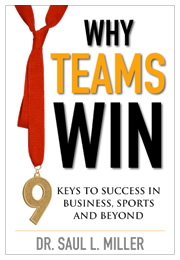
n the backdrop of India's disastrous showing in the Asia Cup, where India returned medal less from the Asia Cup semi-finals for the first time ever, Indian coaches would do well to read Dr. Saul Miller's new book: "Why Teams Win - 9 Keys to Success in Business, Sports and Beyond".
Dr. Miller is Canada's leading performance psychologist, specialising in the areas of performance and productivity enhancement, team building, and helping people to be successful while dealing with pressure, stress, and change.
In his work with hundreds of sports, business, healthcare and arts teams, Dr. Miller found that the following 9 characteristics are always present in winning teams:
- Sense of Purpose - a common, meaningful goal
- Talent - the ability to identify, recruit and develop team talent
- Leadership - provides vision and direction for the team
- Game Plan
- Committment
- Feedback
- Confidence - how preparation and success builds team confidence
- Chemistry - how providing respect and support to team members can enhance success
- Identity - how self-image is critical to how you perform
Dr. Miller states that if a sports organisation is performing poorly, the solution is rarely to throw money at the problem. Instead, it usually involves going back to basics, working harder, smarter, being more accountable and doing the little things that lead to success.
The book features advice, quotes and interviews from high-profile athletes, coaches as well as from business leaders. The book includes self-evaluation and team-building exercises.
In the world of sport, Dr. Miller's clients have included professional ice hockey teams such as Vancouver Canucks and Florida Panthers, as well as Canadian and US Olympians in a dozen different sports.
It will certainly not hurt for Indian hockey officials to hire the services of this top performance pyschologist to get Indian hockey back to its winning ways.
|
| Visitor of the Month |
he June 2009 Visitor of the Month is Sanjiv from Bangkok, Thailand. Sanjiv wrote the following to BharatiyaHockey.org:
I am presently working for Planet Yoga in Bangkok, part of the California Wow X Fitness Centre. I am a big fan of Indian hockey, and hope they get back their past glory. I can help India hockey by giving training to the players in physical, mental and emotional fitness.
|
| Fun With Numbers |
Statistics by B. G. Joshi
he June 2009 edition of Fun with Numbers deals with country records in the Men's Jr. World Cup. The 20-Nation Men's Jr. World Cup will be held jointly by Malaysia/Singapore from June 7 through June 21. The table below shows the 4 pools in which the 20 participating countries in the 2009 edition have been grouped into.
Germany is the only country that has won the Jr. World Cup multiple times. 4 other countries (India, Pakistan, Australia, Argentina) have won the title once each.
The last 4 Jr. World Cup tournaments have been won by 4 different countries - Germany (1993), Australia (1997), India (2001) and Argentina (2005).
It has been 30 years since Pakistan won its solitary gold in the Jr. World Cup (1979).
| Pool |
Country |
Appearances |
Best Finish |
Pool |
Country |
Appearances |
Best Finish |
| Pool A |
Argentina |
7 |
Gold (2005) |
Pool B |
Germany |
8 |
Gold (1983, 85, 89, 93) |
| |
Pakistan |
7 |
Gold (1979) |
|
Australia |
7 |
Gold (1997) |
| |
Belgium |
3 |
11th (1985, 2005) |
|
South Africa |
2 |
11th (2001) |
| |
Egypt |
5 |
9th (1997) |
|
Japan |
1 |
11th (1997) |
| |
Russia |
1 |
12th (1989, as USSR) |
|
Chile |
4 |
12th (1979) |
| Pool C |
Spain |
7 |
Bronze (2005) |
Pool D |
India |
6 |
Gold (2001) |
| |
South Korea |
4 |
4th (1989) |
|
Netherlands |
8 |
Silver (1985) |
| |
England |
6 |
4th (1997, 2001) |
|
New Zealand |
2 |
9th (2001) |
| |
Malaysia |
7 |
4th (1979, 83) |
|
Poland |
1 |
14th (2005) |
| |
USA |
1 |
11th (1989) |
|
Singapore |
2 |
11th (1979, 83) |
|