
Los AngelesLos AngelesLos Angeles


It was the festive ocassion of Baisakhi on 13 April, 1919. Four persons went around the streets of Amritsar announcing by the beat of an empty kerosene tin that there would be a public meeting at Jallianwala Bagh that afternoon. A crowd of around 20,000 from Amritsar and the neighbouring villages gathered in Jallianwalla Bagh - an 8 acre plot of land bound on three sides by high walls of adjoining buildings and a 15 feet high wall on the the fourth side.

Brigadier-General Dyer came to know of this around 4 pm. He immediately left for the place with 2 armoured cars and around 50 soldiers (Gurkhas and Baluchis). Since the gate was small, Dyer had to leave the armoured cars outside. In double-file he marched his men and ordered them to crouch on the left and right on a raised platform. Without any warning he ordered his troops to fire on the unarmed crowd. The shooting continued for 10 minutes, and when the bullets stopped raining after 1650 rounds, the General's faithful brown Indians had sent 379 of their own kinsmen to their death. Three times the number of dead were wounded, making a total of 1516 casualties with 1650 bullets.

Punjab was placed under martial law. The people of Amritsar were forced to crawl on their bellies before Europeans. General Dyer errected a whipping post for the public flogging of those who ignored his orders. The Lt-Governor of Punjab, Sir Michael O'Dwyer sent the General a telegram approving of the brutality. The House of Lords voted in favour of General Dyer's actions, and the British people helped the Morning Post collect 30,000 pounds for General Dyer. The General died in retirement at Bristol on July 23, 1927.


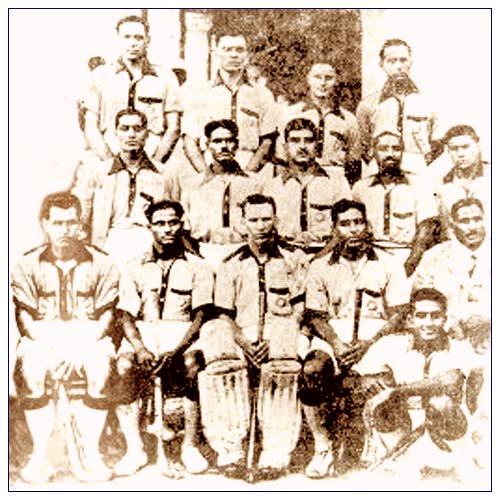
1932 Olympic Hockey Champions

Photo Courtesy : Wills Book of Excellence